
This morning we went to the market in Awassa, accompanied by Denbeshu, Ermias and Tamiru. We were looking for a gabi – a traditional cloak of the Sidama people that is worn in the Meno Highlands. We had already admired such gabis at the homes of Denbeshu and his relatives. After a short search through the winding market alleys, we found what we were looking for in a small shop.
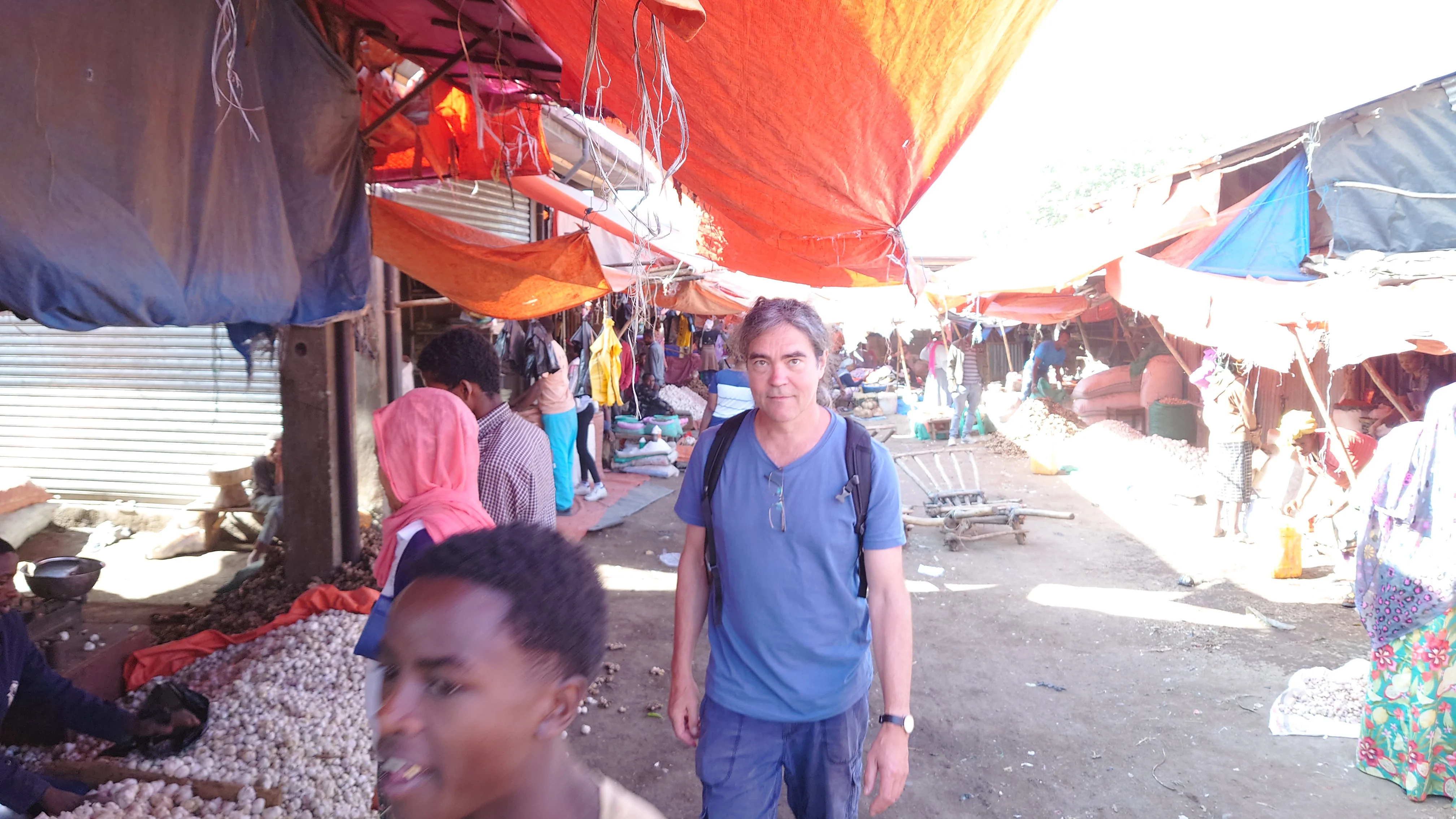
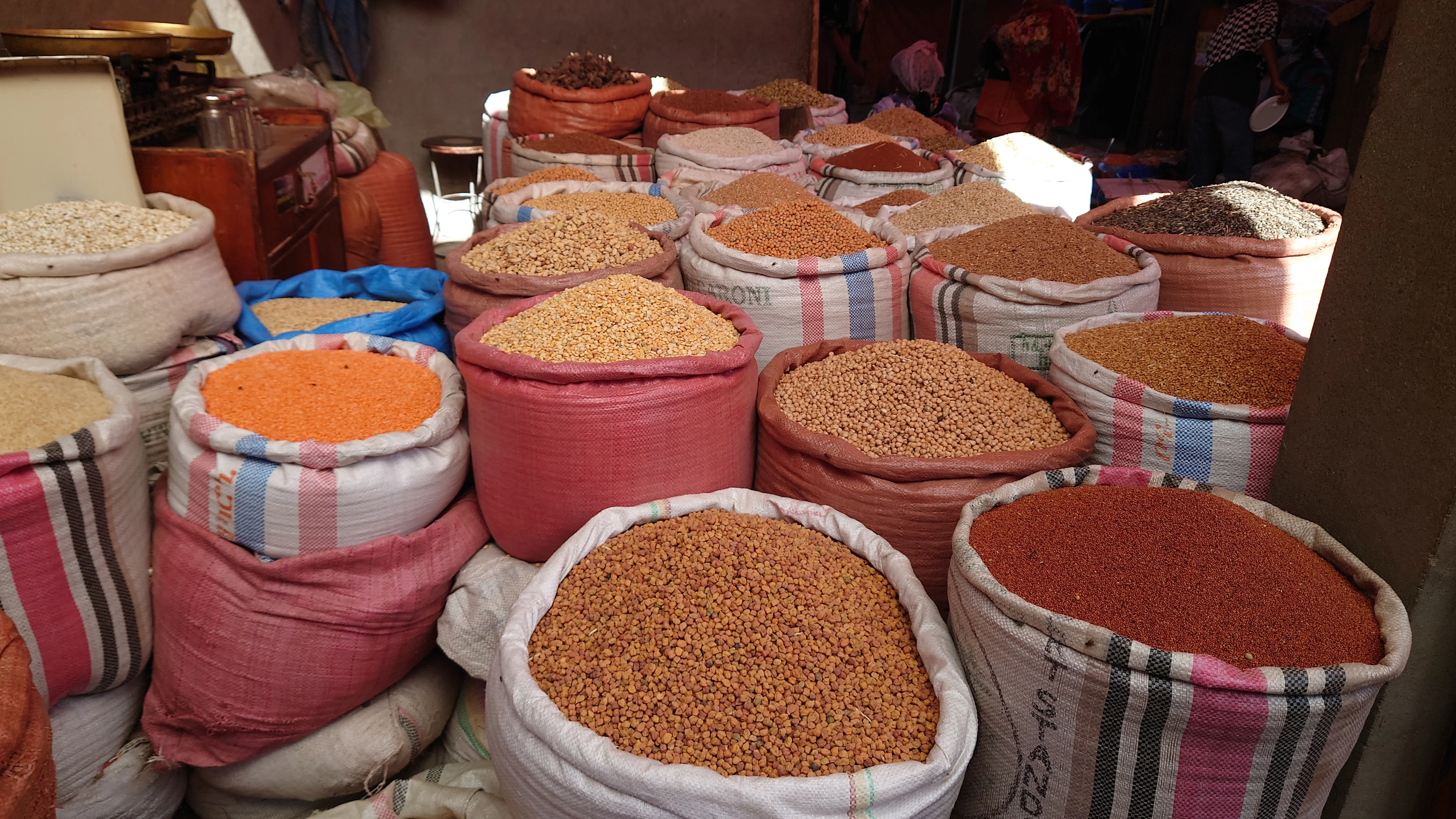
Luckily, Denbeshu and Ermias negotiated a good price, so that in the end each of us could hold a gabi of our own.
We had been welcomed with great fanfare, and we were seen off in just the same way. Denbeshu, Ermias, Tamiru, Gambata's son, Daniel and his brother drove us to the airport. After the farewells and the obligatory group photo, we took a propeller plane back to Addis Ababa.
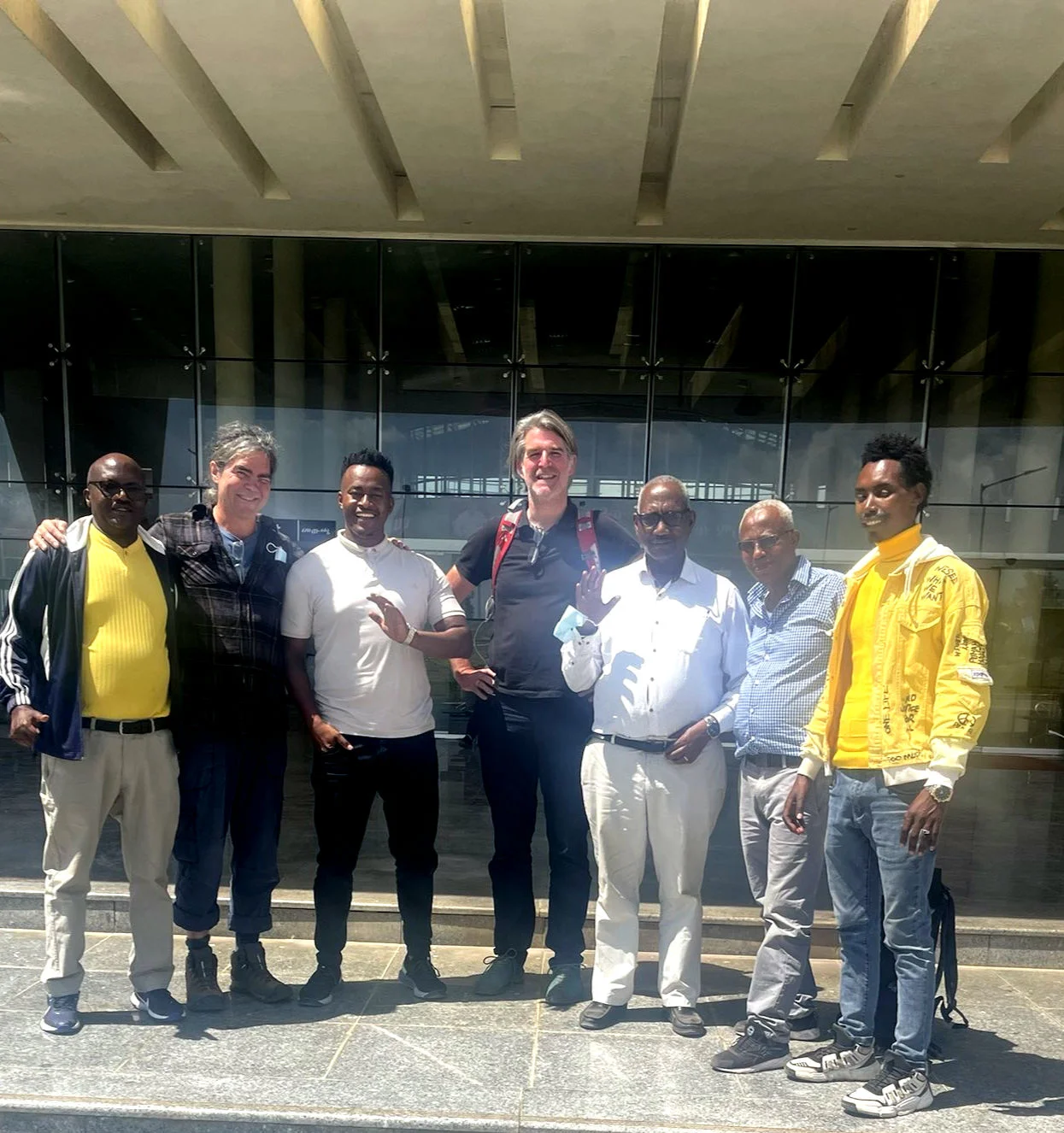
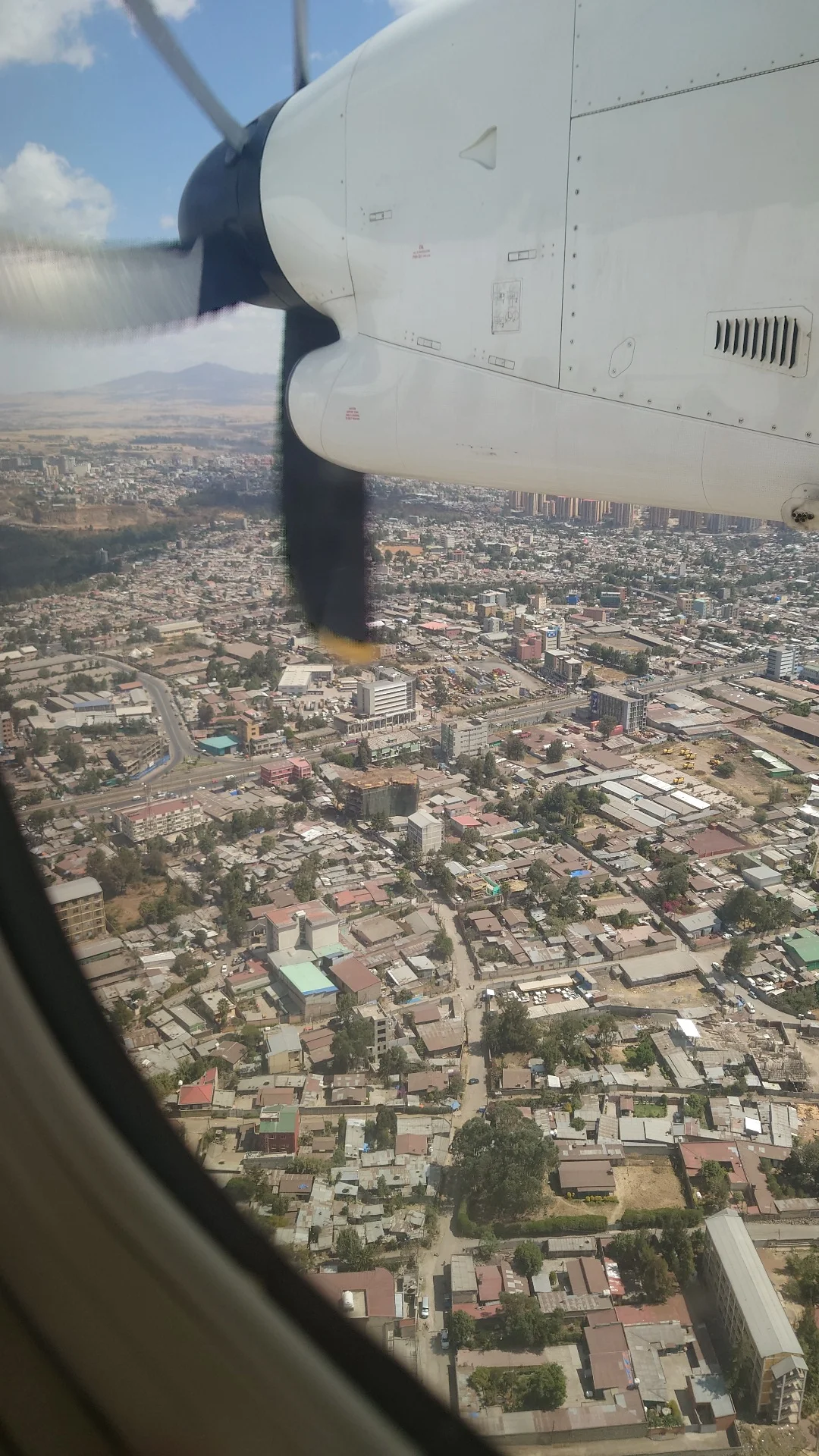
Full of impressions after ten intense and eventful days, we are now at our hotel in Addis Ababa, trying to draw a brief conclusion:
We were received very warmly in the Meno Highlands. Not only did Denbeshu's family take loving care of us – strangers also greeted us in the street and expressed their gratitude with gestures.
It was wonderful to see that, compared with the impression Helmut had on his last visit more than ten years ago, the Meno Highlands have clearly turned greener, with many more trees and shrubs. Trees that had just been planted back then are now in full splendour. Most farmers cross the Jersey bulls with the local zebu cattle, even if they are not necessarily taking part in the area exclosure programme. Some farmers have apple trees and produce honey. So the Meno project – and Denbeshu's work – can fundamentally be called a success.
Despite these successes, a good deal of persuasion is still needed to win even more farmers over to the idea of the area exclosure project – especially as the cost of living, for example clothing and school supplies, has become very high.
During our visit, some good developments emerged that make us optimistic about the future. One is the interest in the Meno project that has been sparked at GIZ.
The talks with the staff of the regional GIZ office in Hawassa were extremely promising. Their spontaneous visit to the Meno Highlands in particular shows their interest in and appreciation of the project.
In addition, highly respected farmers want to get more involved in the project. For example, one farmer who implemented the project idea in all its aspects entirely without any bonus payment and now wants to contribute to the farmers' cooperative. He even went from being a poor farmer to a member of the Ethiopian national parliament. Or another farmer who was once chairman of the Soka-Sonicho kebele.
Then there are Denbeshu's nephews, Ermias and Tamiru, who are very motivated to create an economic link with activities in Wondo or Awassa, if the opportunity arises.
So we can look to the future with optimism.