
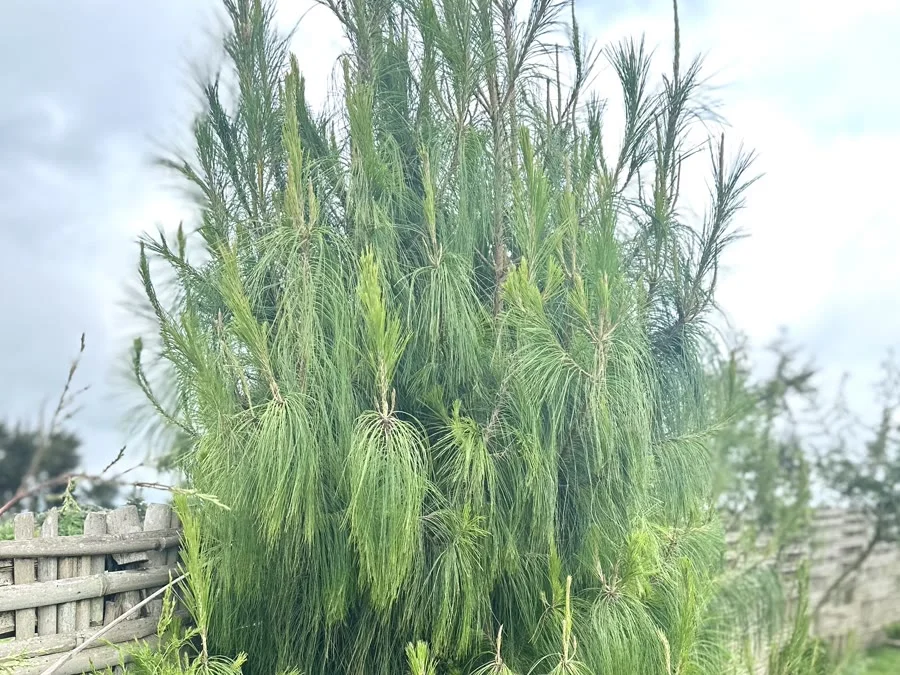
We evaluate the effects of bamboo leaf supplementation on feed intake, body weight gain, and carcass yield of Arsi Bale lambs. Eight treatments were used with different levels of inclusions at 150 g (T2), 300 g (T3), and 450 g (T4) in both groups (i.e., indoor-fed vs. grazed in the field). T1 and T5 were control treatments for indoor-fed and those grazed in the field, respectively. A 2 x 4 factorial experiment was used with T1-T4 for indoor feeding and T5 -T8 for those grazed in the field. Carcass evaluation was carried out for all lambs. Feed analysis and evaluation of the nutritional quality of feed samples were examined. The results showed a significant (P < 0.000) increase in the nutrient and dry matter (DM) intake and growth performance of lambs with increased levels of bamboo leaves supplementation. There was a significant (P < 0.000) increase in the average daily gain of indoor-fed lambs from 33.33 to 62.67 g/day. The feed conversion efficiency of indoor-fed lambs was within the range of 0.057 to 0.084. The results confirmed that fresh bamboo leaf supplementation had a positive effect on the growth performance and carcass yields of lambs with improved DM intake. We suggest that the inclusion of fresh bamboo leaves is crucial to improve the performance of lambs. Increased inclusion of bamboo leaf supplementation in the lambs' diet resulted in improved body weight gain and would be a viable option to boost sheep production.
The above paragraph is the abstract of one of the articles of my PhD thesis. The feeding trial of lambs was conducted in Meno highland using grass cut from area exclosures, bamboo leaf and field grazing. Mountain bamboo is one of the major plants covering the forest of Meno highland. About 10 years ago, the bamboo coverage was much higher than today's coverage. It is declining at an alarming rate due to deforestation. The deforestation of bamboo is happening because of bamboo's multipurpose use. It is used for the construction of houses, fences, baskets, house furniture, and as livestock feed. Bamboo is evergreen and used as livestock feed in the dry season when grass becomes scarce and dry. Nowadays, the deforestation is getting more intense and rapidly progressing due to human and livestock population growth.
The Meno highland project is working against the bamboo and other forest trees deforestation by employing area exclosures project, where plots of individual grazing lands are closed, hindering the free access of humans and animals to the closed land. Area exclosures help the bamboo population to regenerate by quick growth and multiplication. This action protects the natural environment from degradation and contributes to the sustainable use of natural resources.
Therefore, any person interested in supporting the sustainable use of bamboo and environmental protection is invited to take part in supporting the Meno highland project financially.